


By Nadia Ramlagan – Producer
A surge in tick bites in West Virginia has some county health departments offering an antibiotic to help prevent Lyme disease if taken within a 72-hour window of being bitten.
The number of Lyme disease cases in the Mountain State jumped from around 1,000 in 2020 to almost 4,000 in 2025, alarming health officials.
Stephen Eschenauer, health officer for the Kanawha-Charleston Health Department, said for $25, residents can receive a consultation and a dose of doxycycline in Kanawha or Fayette County. Dr. Carolyn Bridgett Morrison, health officer for the Greenbrier County Health Department, advised the same treatment is available for Greenbrier County residents.
“Preferably, if they can bring the tick in or get the tick removed as quickly as possible, we can see if they are a candidate to receive the two tablets of doxycycline for post-exposure prophylaxis,” Eschenauer explained. “We do that with a nurse visit here at the Kanawha-Charleston Health Department.”
Eshenaur added any tick bites leading to fever, aches and pains, fatigue or rashes should be addressed by a healthcare provider. Experts recommended using EPA-registered insect and tick repellents and thoroughly checking the body and scalp for ticks after spending time outdoors.
Dr. Joydip Roy, market chief medical officer for UnitedHealthcare of the Mid-Atlantic, said being careful around tall grasses and wooded areas can help reduce your chances of tick exposure.
“You want to walk on trails whenever that’s possible because if you’re going off into the brush, then you’re going to increase your exposure,” Roy recommended.
Dogs and cats are a common vector for ticks. Eshenaur pointed out many people may not realize their pet can bring ticks into their home from the yard and may not bother to check themselves because they stayed inside.
“The animal may have brought the tick in and it has been transmitted onto them, especially if it gets up into their bed or on their couch,” Eshenaur noted.
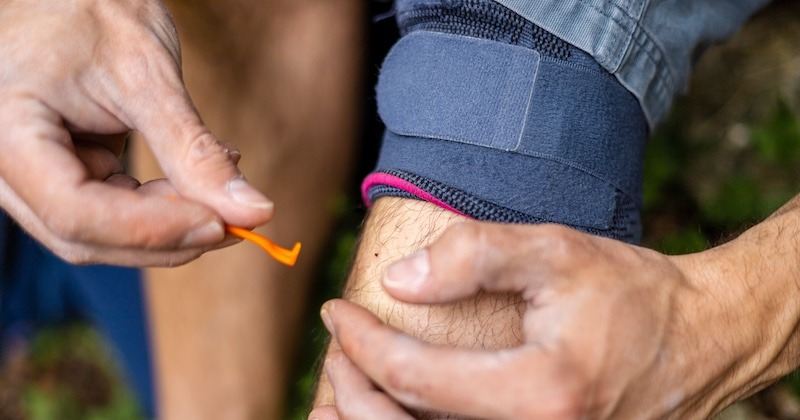
The Centers for Disease Control and Prevention recommends removing an attached tick using fine-tip tweezers and afterward, washing the area with soap and water.
Live ticks should be disposed of by placing them in a sealed container or in a jar of alcohol, wrapping them in tape and throwing away or flushing them down the toilet.