


 By William “Skip” Deegans
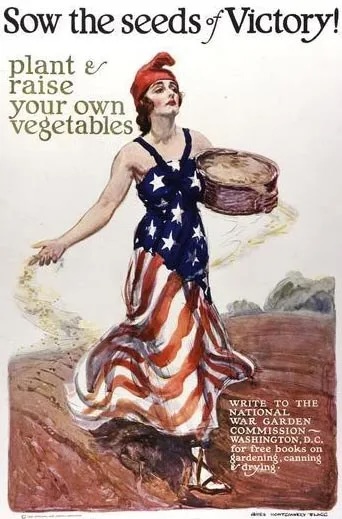
In 1941, the National Garden Conference was convened to set the groundwork for the World War II Victory Garden program. The program was designed to free up agricultural foods, packaging, and transportation for the war effort and to make up for the shortage of agricultural workers. The program wasn’t new. It was tried during World War I and was called war or liberty gardens.
Organizers recommended communal gardening on school grounds, in parks, and on vacant lots. The program was especially directed toward farm and suburban families who had both land and gardening experience. To set an example, First Lady Eleanor Roosevelt had a victory garden planted on the front lawn of the White House in 1943. By May of that year, victory gardens were supplying 40% of the produce in America.
A. L. Keller, West Virginia University extension specialist in vegetable gardening, said, “It is important that West Virginians produce as much as possible of the food they will eat so that supplies usually sent in from other states may be diverted to essential war needs.” Greenbrier County farmers stepped up to the plate and organized the Greenbrier Valley Farm Products Marketing Association and opened a pooling depot at the State Fair Grounds. Farmers diverted fields to vegetable patches. On Muddy Creek Mountain, for example, Palmer Stacy planted 20 acres of potatoes and 7 acres in cabbage, beans and tomatoes.
Commercial buyers came to the depot in Fairlea. Kroger in Charleston bought cabbage, snap beans, watermelons, corn, tomatoes, sweet potatoes, turnips, mustard, kale and spinach. Bluefield Produce and Provision Co. was buying 10-15 car loads of mixed vegetables weekly and said Greenbrier County was producing “as fine quality of potatoes grown anywhere.”
In 1944, 15.5 million gardeners took part in the Victory Garden program. By the end of the war in 1945, gardeners had grown 8-10 million tons of food.
Poster courtesy of Pennsylvania State University.
Sources: The West Virginia News, National Park Service, Smithsonian.